Tamales: their origins, ingredients and how to eat them
Margariteros · 13 November 2026
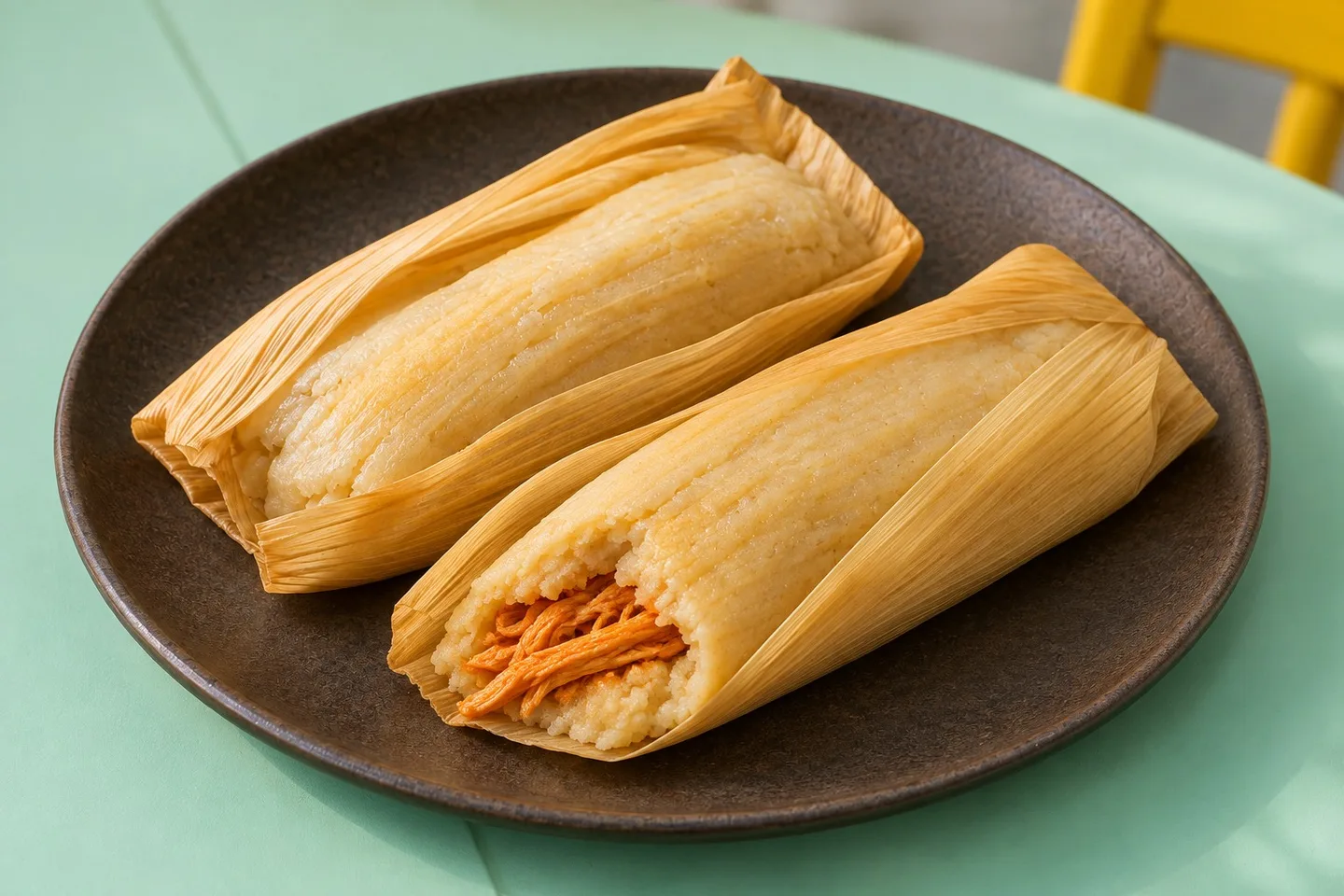
A tamal arrives wrapped, but the wrapping stays on the plate. Inside is corn dough with a filling; outside are leaves used to enclose it during preparation. At Margariteros, Chmielna 7/9 in Warsaw, our version contains achiote chicken and comes as two steamed tamales, approximately 200 g.
If Mexican food mainly means tacos and burritos to you, tamales introduce another way to use corn. The filling sits inside dough cooked in steam rather than a finished tortilla. Understanding the dough, the leaves and the seasoning makes the first serving less mysterious. It also opens a door to a much wider family of regional dishes.
What does tamales mean?
In Spanish, tamal is singular and tamales is plural. The name is connected to the Nahuatl word tamalli and the act of wrapping. Writing for Mexico’s education ministry, Alberto Peralta de Legarreta explains that the term has a broader history than one modern recipe. It can describe different wrapped foods, including preparations without corn dough. Source: SEP — Sobre los tamales.
For a restaurant guest, three questions are particularly useful: what is the dough made from, what is inside, and what encloses it? Those answers describe the individual dish better than its name alone. For our tamales, the answers are nixtamalised corn flour, chicken with achiote, and corn husks.
Where do tamales come from?
Tamales have pre-Hispanic origins. Mexico’s agriculture ministry describes a food that existed before the Spanish conquest and developed through many local traditions. That provides a historical starting point without assigning the dish a single inventor or an exact birthday. A living food tradition can change in filling, shape and preparation while retaining a recognisable connection to earlier cooking. Source: AGRICULTURA — Exóticos o tradicionales.
Tamales also belong to gatherings around the table. For Día de la Candelaria on 2 February, people in Mexico share tamales and atole, a corn-based drink. The agriculture ministry’s account connects the occasion with the earlier Rosca de Reyes celebration: people who find the hidden figurine arrange the food for the February gathering. Atole is part of this cultural explanation, rather than a drink we are promising on our own menu. Source: AGRICULTURA, 1 February 2026.
Regional versions: more than one shape or filling
Mexico’s Sistema de Información Cultural records examples including Oaxacan tamales with mole in banana leaves and the distinctively angular corundas of Michoacán. Its account covers sweet, meat and vegetable versions. Steaming is common, but some tamales are cooked by other methods, including baking. Source: Secretaría de Cultura — Los tamales.
These examples are useful when reading a menu. A corn husk does not automatically mean chicken, and the word tamales does not establish whether a serving is sweet. Nor should every version look like the same parcel. Our achiote chicken tamales are one specific offering from the Margariteros kitchen, rather than a claim to represent every region or reproduce one regional tradition exactly.
Masa and nixtamalisation: understanding the corn dough
Masa means dough. Our ingredient list specifies nixtamalised corn flour. Nixtamalisation is a treatment of the grain, rather than a seasoning: corn is cooked in an alkaline solution containing food-grade lime (calcium hydroxide), allowed to rest, drained and then milled. The resulting masa is used for several kinds of food. Source: AGRICULTURA — Del maíz a la tortilla, 13 June 2025.
That explains why “made from corn” is only the beginning of a description. A tortilla and the dough surrounding a tamal share an ingredient but perform different jobs in the finished dish. With tamales, try a small piece of the dough before a mouthful containing the filling. It is a simple way to notice the contribution of each part without needing a list of tasting terms.
For home cooking, check the flour specified by your chosen recipe. “Corn flour” on a packet does not, by itself, establish that the corn has been nixtamalised. In the same way, our menu identifies the flour used in our dish; it does not say that the complete treatment and milling of whole corn takes place in our kitchen.
What is achiote?
Achiote is a name for Bixa orellana. The botanical account published by Centro de Investigación Científica de Yucatán records the use of its seeds for extracting colour and, when ground, as a condiment. Mexico’s seed inspection and certification service, SNICS, also describes natural pigments obtained from the plant. Sources: CICY, SNICS.
In our ingredient list, achiote appears alongside orange juice, apple cider vinegar, garlic and seasonings. That gives you a more specific starting point than “chicken tamales”. The colour of a dish is not enough to tell you its heat level, however. If spice is important to your choice, ask about the current preparation rather than trying to judge it from an illustration or the ingredient’s name.
How are tamales made?
UNAM’s home recipes show the preparation of tamales in corn husks:
- Hydrate the husks. Place dried corn husks in warm water.
- Prepare the masa. Combine dough, fat and liquid as directed by your chosen recipe.
- Prepare the filling. Follow the instructions for that particular version.
- Assemble. Spread masa on a husk and put filling in the centre.
- Fold. Bring the sides inwards and tuck the tip underneath.
- Steam. Set the parcels upright in a steaming vessel and follow the recipe’s cooking time.
Source: UNAM — Recetas caseras. Tamales y atoles. This outlines the home preparations described, rather than setting rules for every regional style. The publication includes different fillings and cooking times, so use one complete recipe rather than mixing instructions from several.
Our menu confirms that the Margariteros version is steamed and served in corn husks. It does not publish dough ratios, the duration of each stage or the precise folding technique used by the kitchen. The sequence above explains a general method, rather than giving instructions for reproducing our restaurant recipe.
How to eat your first tamal
Start by opening the corn husks on the plate and exposing the dough. Remove them or move them aside so that they do not get into your mouth. Our menu makes the instruction explicit: the corn husks are not edible. Eat the dough and filling inside. Separating a small piece first also lets you see the inside of the parcel before taking a larger mouthful.
There is no need to approach it like a burrito, where the outer tortilla is eaten with the filling. The outside has a different purpose here. If you cannot tell where a piece of husk ends and the dough begins, ask the team to show you what to leave on the plate. Unwrapping is part of eating the dish, rather than a sign that anything has gone wrong.
Our achiote chicken tamales in Warsaw
The menu checked on 13 November 2026 describes a serving of two tamales, approximately 200 g. The ingredients are nixtamalised corn flour, chicken, water, beef fat, achiote, orange juice, apple cider vinegar, garlic, sweet paprika, oregano, salt and black pepper. See the Margariteros menu for the full description and current price.
This is a meat dish, including the beef fat listed among the ingredients. A vegetarian choice therefore means selecting another item, rather than assuming that removing the chicken would make this recipe suitable. If you have an allergy or a particular dietary requirement, ask about ingredients and preparation before ordering. A corn-based dough is not, on its own, confirmation that the complete restaurant serving is gluten-free.
Tamales, tacos or a burrito?
If you are interested in… · Look at this part of our menu
Steamed corn dough enclosing a meat filling: Achiote chicken tamales
A corn tortilla carrying toppings: Tacos: read the individual filling description
A wheat tortilla with chicken, rice and cheese: Burrito de Pollo al Chipotle
This comparison describes our menu rather than every version of these dishes around the world. When ordering with friends, use the ingredients and serving information to decide what you need. The names tacos and tamales do not mean that the portions contain an identical amount of food. An image is not a substitute for the stated serving size either.
To try tamales in central Warsaw, find Margariteros at Chmielna 7/9. Check the current menu, explore more from our kitchen or open the booking form. Confirm the availability of a particular dish before ordering.
Sources and checking the details
The description of our serving is based on the Polish and English menu read on 13 November 2026. Links beside the relevant passages lead to the cultural, botanical and cooking sources used: SEP, Secretaría de Cultura, AGRICULTURA, SNICS, CICY and UNAM. All were read during preparation of this article. The history and regional examples explain the wider food tradition; the serving size and ingredient list describe our own menu item.
View current menu