Tacos: tortillas, fillings and salsa. A guide to choosing them in Warsaw
Margariteros · 13 November 2026
A taco is a tortilla with a filling that you can fold and eat by hand. Choosing one means looking at the whole combination: the tortilla, the main ingredient and how it is prepared, the salsa and the finishing touches. Chicken with pineapple offers a different combination from pork with mango or Portobello mushrooms with pickled onion, even when all three use corn tortillas.
If you are looking for tacos in Warsaw, this guide explains the basics and compares four options at Margariteros on Chmielna 7/9. It will help you decide what you feel like eating and what to ask before you order.
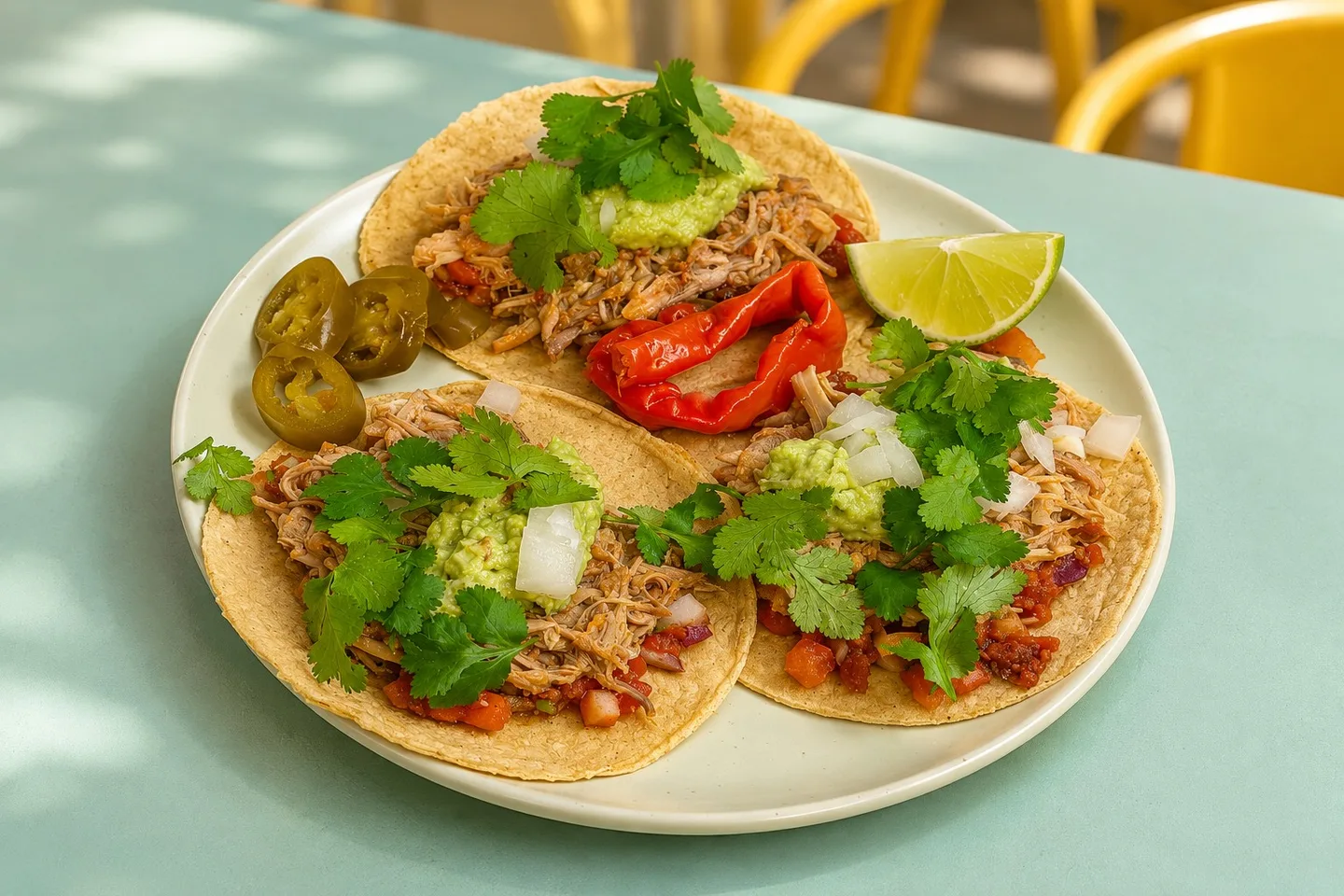
Start with the tortilla: corn or wheat?
The tortilla contributes flavour and texture to a taco. Mexico’s Secretaría de Cultura describes it as an edible base that wraps other ingredients. It is worth paying attention to the tortilla itself alongside the filling. Secretaría de Cultura: Las tortillas.
Tortillas are not always made from corn. Mexico’s Sistema de Información Cultural also describes the place of wheat tortillas in the north of the country. Both belong in its regional cuisines; the type of flour alone cannot tell you everything about a dish. Secretaría de Cultura: regional cuisines.
Our menu describes all four tacos below as using corn tortillas. That is a specific fact about the Margariteros menu. If you are buying tortillas for home, check their ingredients and heating instructions. A product name, its colour or a photograph of a finished taco cannot replace that information.
What is nixtamalization?
There is a grain-processing technique behind the corn tortilla. Nixtamalization involves treating corn in water with food-grade lime before milling it into dough. Ciencia UNAM explains the process. Here, lime means the substance used in processing the grain, not lime juice.
Mexico’s Secretariat of Agriculture describes cooking the grain, letting it rest, draining and milling it, then shaping and cooking tortillas. Source: Del maíz a la tortilla.
For someone eating a taco, the practical result matters: the tortilla needs to hold the filling and fold around it. At home, you can begin with prepared tortillas; processing grain yourself is not a requirement for learning how to assemble the dish.
Why are there so many kinds of taco?
Tacos come in many forms, and the history of one variety does not explain them all. Gaceta UNAM discusses tacos al pastor and tacos de canasta separately. For al pastor, it connects the meat-cooking technique with the Middle East, while noting that some details in accounts of the earliest establishments are not fully documented. Gaceta UNAM: pastor and canasta.
It helps to distinguish the name of a variety from the description of a particular serving. You do not need a single date for the invention of the taco to choose a meal. More useful questions are: which tortilla, which filling, how is it prepared, and which salsa comes with it? Pastor and canasta are cultural examples here, rather than dishes promised on our menu.
How to read a taco description
Start with the filling, then read the rest. Fruit may appear in a salsa or a sauce; onion may be fresh or pickled. These details can guide your choice even when you already know which main ingredient you like. There is no need to add every accompaniment on the table to every taco.
Try the first bite as it comes, then add a little of whichever accompaniment interests you. This is a simple way to decide whether you want more lime or chilli without covering the other flavours straight away. If you have a preference, ask the team which ingredients are already inside and which arrive on the side.
Four fillings at Margariteros
Taco de Pollo: chicken and pineapple
Our version combines grilled chicken with pineapple salsa with cinnamon, pickled onion, guacamole and coriander. The accompaniments also include jalapeño and lime. If you like the idea of meat with a fruit salsa, start with this description. Cinnamon belongs to this particular combination; it does not mean that every chicken taco will have a similar flavour.
Taco de Carnitas: pork and mango
Our menu describes pork in mango sauce with salsa, guacamole, red onion and coriander. Compared with Pollo, both the meat and the fruit accompaniment change. The name carnitas does not establish how every restaurant prepares its version. If you are interested in how the meat is prepared, ask the team before ordering.
Taco de Camarón: prawns and pineapple salsa
Tiger prawns are the main ingredient, accompanied by pineapple salsa, guacamole and coriander. The description also lists jalapeño, lime and pickled onion on the side. This is the option to explore if you are choosing seafood. Do not assume its pineapple salsa is identical to the one in Pollo: the chicken description specifically mentions cinnamon.
Taco Vegano: Portobello and pickled onion
The filling centres on Portobello mushrooms, guacamole, two kinds of pickled onion and coriander. The menu labels this dish vegan. If you are looking beyond meat and seafood, this is the description to check. It is a different choice from Quesadilla Vege, which contains mozzarella according to our menu.
Are tacos spicy or gluten-free?
The word taco does not specify heat. Salsa, jalapeño and other accompaniments appear in our menu descriptions, but there is no numerical spice scale. Ask what is included and whether a particular accompaniment can be served separately. That lets you establish the actual options before ordering.
A corn tortilla does not establish that the whole dish is gluten-free either. Sauces, other ingredients and preparation conditions need a separate check. If you have an allergy, tell the team which specific ingredient you need to avoid. Do not base the decision only on the filling’s name or the type of tortilla.
How to assemble a taco at home
Prepared tortillas, your chosen cooked filling and a few accompaniments are enough to explore the basic format. The following is a general assembly method, rather than the Margariteros kitchen’s recipe:
- Have your filling and salsa ready before heating the tortillas. Follow the producer’s instructions when using prepared ingredients.
- Heat the tortilla as directed on its packaging. Check that it is flexible enough to fold.
- Put a modest amount of filling down the centre. You can add more later if needed; an overfilled tortilla is harder to handle.
- Add your chosen salsa, then onion or herbs if they suit the combination. Begin with a small amount of liquid toppings.
- Fold the tortilla around the filling and eat it freshly assembled over a plate. If the contents fall out, use a smaller amount of filling for the next one.
When comparing two versions, try changing one element at a time, such as the salsa. It makes it easier to notice what changed the overall flavour.
Before your visit
The dish descriptions above are based on the menu checked on 13 November 2026. Check the current Margariteros menu for prices, availability and current details, or explore our kitchen overview.
You will find Margariteros at Chmielna 7/9 in Warsaw. Choose a filling, read its accompaniments and ask about anything that matters to you. If you are planning your evening ahead, continue to reservations.
View current menu